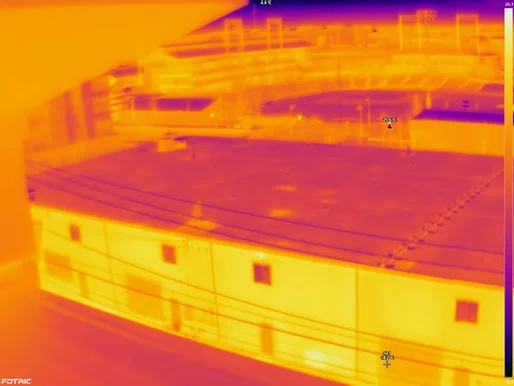
Infrared Building Envelope Inspections in South Florida
Professional Infrared Building Envelope inspections using thermal imaging to detect air leakage, insulation deficiencies, moisture intrusion, thermal bridging, and energy waste invisible to visual inspection. Advanced infrared thermography optimizing energy efficiency, preventing moisture damage, and improving indoor comfort in South Florida commercial and residential buildings.
Infrared building envelope inspections utilize professional thermal imaging technology revealing building envelope defects including air infiltration, insulation voids, moisture intrusion, thermal bridging, and energy loss patterns throughout South Florida commercial and residential properties. At Certified Inspectors, our certified thermographers scan walls, roofs, windows, doors, foundations, and building assemblies identifying thermal anomalies indicating envelope performance problems invisible to visual inspection. We understand building science, heat transfer principles, moisture dynamics, and South Florida’s unique climate challenges including high humidity, intense solar radiation, and air conditioning loads. Our infrared envelope surveys support energy audits, moisture investigations, building commissioning, pre-purchase assessments, and envelope retrofit planning for office buildings, multi-family properties, warehouses, retail centers, and high-performance homes. Thermal building envelope analysis prevents moisture damage, reduces energy costs, improves indoor comfort, and extends building service life throughout South Florida’s diverse building stock.
Same-Day Reports
Licensed & Insured
5-Star Rated Service
BBB A+ Accredited
We Don’t Just Inspect Properties. We Earn Trust.
Read what homeowners, buyers, sellers, real estate professionals, and commercial clients have to say
about their experience with Certified Inspectors.


What’s Included in Building Envelope Inspections
Our infrared building envelope inspections provide comprehensive thermal evaluation identifying air leakage, insulation problems, and moisture concerns.
Air Leakage Detection
- Exterior wall air infiltration patterns
- Window and door frame leakage
- Penetration sealing deficiencies
- Construction joint air gaps
- Ceiling plane and attic bypasses
- Electrical outlet and fixture leakage
- Foundation and sill plate infiltration
Insulation Assessment
- Exterior wall air infiltration patterns
- Window and door frame leakage
- Penetration sealing deficiencies
- Construction joint air gaps
- Ceiling plane and attic bypasses
- Electrical outlet and fixture leakage
- Foundation and sill plate infiltration
Moisture Intrusion Detection
- Water intrusion thermal patterns
- Hidden moisture within wall assemblies
- Roof leak moisture signatures
- Window and door water entry
- Foundation moisture migration
- Plumbing leak detection within walls
- HVAC condensation problems
Thermal Bridging Identification
- Structural framing thermal bridges
- Steel stud and metal framing heat loss
- Window and door frame thermal bypasses
- Balcony and canopy penetrations
- Concrete column and beam heat transfer
- Foundation wall thermal bridging
Window & Door Performance
- Window glazing thermal performance
- Failed window seal detection
- Door weatherstripping effectiveness
- Sliding glass door air leakage
- Frame and sash thermal patterns
- Installation quality verification
HVAC System Interaction
- Duct leakage thermal signatures
- Supply and return register performance
- Attic duct insulation effectiveness
- Air handler and plenum leakage
- Building pressure and airflow patterns
- Conditioned space boundary integritye
Energy Loss Quantification
- Building envelope energy waste patterns
- Heat gain and loss identification
- Solar heat gain assessment
- Air conditioning load increase factors
- Energy efficiency improvement priorities
- Cost-benefit analysis for envelope upgrades
Comprehensive Envelope Report
- Thermal images with temperature scales
- Digital photographs for comparison
- Problem location and severity documentation
- Energy loss and moisture risk assessment
- Repair and retrofit recommendations
- Certified thermographer analysis and conclusions
When You Need Building Envelope Thermography
Infrared building envelope inspections serve critical purposes in energy management, moisture prevention, and building performance optimization.

High Energy Cost Investigation
Buildings with unexpectedly high cooling costs benefit from thermal envelope assessment. Infrared scanning identifies energy waste sources including air leakage, insulation deficiencies, and thermal bridging. Comprehensive thermal analysis quantifies energy loss patterns supporting targeted improvements reducing operating costs. Energy audit thermal inspections enable informed retrofit investment decisions.

Comfort and Indoor Air Quality Problems
Buildings experiencing hot/cold spots, humidity problems, or comfort complaints warrant envelope thermal investigation. Air leakage and insulation deficiencies create temperature variations and moisture issues. Thermal imaging reveals envelope defects causing comfort problems. Identifying and correcting thermal defects improves indoor comfort and air quality significantly.

Moisture and Water Intrusion Concerns
Buildings with moisture problems, mold growth, or suspected water intrusion require thermal moisture investigation. Infrared thermography detects hidden moisture within wall assemblies, roof systems, and building enclosures. Early moisture detection prevents extensive damage enabling targeted repairs. Thermal moisture scanning provides non-destructive investigation documenting moisture extent.

New Construction Commissioning
New construction thermal commissioning verifies building envelope installation quality. Thermal scanning identifies construction defects including insulation voids, air barrier failures, and workmanship problems enabling correction during warranty periods. Quality verification prevents long-term energy waste and moisture problems from construction errors.

Pre-Purchase Building Assessment
Commercial property buyers and home purchasers conduct infrared envelope assessments during due diligence documenting envelope condition, identifying energy waste, and revealing hidden moisture problems. Thermal evidence of envelope defects supports purchase price negotiations or identifies concerning conditions affecting purchase decisions and future operating costs.

Envelope Retrofit Planning
Building owners planning envelope improvements benefit from comprehensive thermal assessment. Infrared scanning prioritizes improvement areas providing objective data supporting retrofit design. Thermal imaging reveals actual envelope performance versus design intent. Pre-retrofit thermal documentation enables post-retrofit verification ensuring improvement effectiveness.
Why Property Owners Choose Certified Inspectors
Building envelope thermography requires specialized expertise, building science knowledge, and professional thermal equipment.
Certified Building Thermographer
Our inspectors maintain professional building thermography certification demonstrating competency in envelope thermal inspection methodology, thermal pattern interpretation, and building science principles. Certification ensures proper scanning techniques, accurate problem identification, and defensible conclusions supporting energy retrofit and moisture remediation decisions.
Building Science Expertise
Effective envelope thermography requires understanding heat transfer, moisture dynamics, building assembly design, and construction methods. Our inspectors possess comprehensive building science knowledge enabling accurate thermal pattern interpretation. We distinguish between thermal signatures indicating actual problems versus normal construction characteristics and solar effects.
Professional FLIR Equipment
We utilize professional-grade FLIR thermal cameras with temperature measurement accuracy and image resolution detecting subtle envelope defects consumer cameras miss. Professional radiometric cameras enable precise temperature measurement and thermal pattern documentation. Equipment quality directly impacts defect detection reliability and diagnostic accuracy.
South Florida Climate Experience
South Florida’s climate creates unique envelope challenges requiring local expertise. Intense solar radiation, high humidity, and cooling-dominated buildings affect thermal patterns. Our regional experience informs proper inspection timing, environmental consideration, and thermal pattern interpretation specific to South Florida construction ensuring accurate envelope assessment.
Comprehensive Improvement Planning
We provide detailed improvement recommendations prioritized by energy savings and moisture risk reduction. Reports specify problem locations, recommended corrective actions, estimated costs, and energy savings projections. Comprehensive documentation supports retrofit design, contractor bid evaluation, and improvement verification ensuring identified problems receive appropriate correction.
Our Building Envelope Inspection Process
We’ve designed our infrared building envelope inspection process to provide comprehensive thermal evaluation revealing energy waste and moisture problems.
Pre-Inspection Planning
Contact us to discuss building type, age, size, energy concerns, moisture problems, and inspection objectives. We schedule inspection timing for optimal temperature differential typically during air-conditioned periods. We discuss blower door testing integration if comprehensive air leakage assessment is desired. We review building construction drawings when available.
Comprehensive Thermal Envelope Scan
Our certified thermographer conducts systematic interior and exterior thermal imaging of walls, roofs, windows, doors, foundations, and building assemblies. We capture thermal images and digital photographs documenting air leakage patterns, insulation deficiencies, moisture signatures, and thermal bridging. Blower door pressurization enhances air leakage detection when integrated. Moisture meter verification confirms thermal moisture indications.
Detailed Envelope Thermography Report
Receive comprehensive infrared building envelope reports within 3-5 business days including thermal images with temperature measurements, comparison photographs, problem location documentation, energy loss assessment, moisture risk evaluation, repair recommendations, improvement cost estimates, energy savings projections, and thermographer analysis. Documentation supports energy retrofit planning and moisture remediation design.
What Makes Our Envelope Thermography Different
Building envelope thermography requires certified expertise, building science knowledge, and professional thermal equipment.
Certified building thermographer credentials
Comprehensive building science expertise
Professional-grade FLIR cameras
South Florida climate experience
Blower door testing integration available
Energy savings and moisture risk analysis
Frequently Asked Questions About Envelope Thermography
How much can building envelope improvements reduce energy costs?
Comprehensive envelope improvements typically reduce energy costs 20-35% in South Florida buildings. Air sealing alone often saves 10-20%. Adding insulation provides 5-15% additional savings. Window upgrades contribute 5-10% reductions. Actual savings depend on existing envelope condition and improvement scope. Thermal imaging identifies specific improvements maximizing return on investment.
Can thermal imaging detect all moisture problems?
Thermal imaging detects active moisture creating temperature differentials and moisture-saturated materials with altered thermal properties. Old, completely dry water damage without moisture content won’t appear. Very thin moisture layers may not produce detectable thermal signatures. However, active moisture intrusion and significant water damage create distinctive thermal patterns. Thermal imaging combined with moisture meters provides comprehensive moisture assessment.
Do I need blower door testing with thermal imaging?
Blower door testing significantly enhances air leakage detection but isn’t always necessary. Thermal imaging alone identifies many envelope defects. Blower door pressurization creates enhanced thermal signatures revealing leakage locations otherwise invisible. For comprehensive air sealing programs or energy retrofit planning, integrated blower door thermography provides superior leakage assessment. For moisture investigation or general envelope screening, thermal imaging alone often suffices.
When is the best time for envelope thermal inspection?
In South Florida, inspections typically occur during air-conditioned periods creating interior-exterior temperature differentials. Early morning or evening minimizes solar interference. Stable weather provides consistent thermal patterns. Winter months may provide larger temperature differentials though summer inspections reveal cooling season performance. Proper inspection timing depends on building type and investigation objectives.
Will thermal imaging damage my building?
No. Infrared thermography is completely non-destructive requiring no drilling, cutting, or material removal. Thermal cameras detect surface temperatures without physical contact. No building components require removal or disturbance. Non-destructive thermal assessment enables comprehensive envelope evaluation without any building damage or repair requirements.
What do building envelope thermal inspections cost?
Costs vary by building size and complexity. Residential thermal scans range $400-1,200. Small commercial buildings cost $800-2,500. Large commercial facilities range $2,000-8,000+. Blower door integration adds $200-500. However, inspection costs are minimal compared to energy savings and moisture damage prevention. Envelope thermal assessment preventing moisture damage or identifying energy savings often provides 100:1 return on inspection investment.
Serving South Florida Buildings
Certified Inspectors provides infrared building envelope inspection services throughout Palm Beach County, Broward County, Miami-Dade County, and surrounding South Florida commercial and residential markets.
Schedule Your Building Envelope Inspection Today
Don’t let envelope defects drain energy dollars or cause hidden moisture damage. Professional infrared building envelope thermography reveals air leakage, insulation deficiencies, moisture intrusion, and thermal bridging invisible to visual inspection. Our certified thermographers utilize professional FLIR equipment and building science expertise providing comprehensive envelope assessment enabling targeted improvements reducing energy costs, preventing moisture damage, and improving indoor comfort. Whether investigating high energy costs, moisture problems, comfort issues, or planning envelope retrofits, infrared thermal inspection delivers essential diagnostic information protecting your property investment.