Particle Analysis & Air Quality Testing Services in South Florida
Professional particle analysis and particulate matter testing services identifying airborne particles, measuring PM2.5 and PM10 concentrations, detecting hazardous fibers and dust, and evaluating indoor air quality protecting building occupants from particle exposure throughout South Florida homes, offices, and commercial facilities.
Particle analysis services provide comprehensive assessment of airborne particulate matter, identifying health hazards from construction dust, asbestos fibers, lead dust, and industrial emissions. At Certified Inspectors, our environmental specialists evaluate fine and coarse particles (PM2.5 and PM10), crystalline silica, and biological allergens across Palm Beach, Broward, and Miami-Dade counties.
We ensure strict compliance with EPA standards and OSHA exposure limits to protect vulnerable populations from hazardous airborne debris. Our advanced microscopy and analytical testing support post-construction cleanups and hazard evaluations, delivering the precise data needed to remediate contamination and establish healthy indoor environments.
Same-Day Reports
Licensed & Insured
5-Star Rated Service
BBB A+ Accredited
We Don’t Just Inspect Properties. We Earn Trust.
Read what homeowners, buyers, sellers, real estate professionals, and commercial clients have to say
about their experience with Certified Inspectors.
What’s Included in Particle Analysis Testing
Our particle analysis provides comprehensive particulate matter assessment identifying health hazards.
PM2.5 Fine Particulate Analysis
- PM2.5 particle concentration measurement
- Particles 2.5 micrometers and smaller
- Deep lung penetration particle assessment
- Gravimetric analysis mass concentration
- EPA 24-hour standard 35 micrograms comparison
- Annual standard 12 micrograms evaluation
- Health risk from fine particle exposure
- Cardiovascular and respiratory impact assessment
PM10 Coarse Particulate Measurement
- PM10 particle concentration quantification
- Particles 10 micrometers and smaller
- Inhalable coarse fraction evaluation
- Construction and road dust particles
- EPA 24-hour standard 150 micrograms comparison
- Respiratory irritation potential
- Upper respiratory tract deposition
Asbestos Fiber Analysis
- Asbestos fiber identification and quantification
- Polarized light microscopy PLM analysis
- Transmission electron microscopy TEM when needed
- Phase contrast microscopy PCM fiber counts
- EPA AHERA clearance level 0.01 f/cc comparison
- OSHA permissible exposure limit evaluation
- Chrysotile, amosite, crocidolite identification
- Post-abatement clearance verification
Lead Dust Particle Testing
- Lead dust wipe sampling
- Surface lead concentration measurement
- Floor lead dust quantification
- Window sill lead dust assessment
- EPA clearance level comparison
- HUD lead hazard standards evaluation
- Deteriorating paint lead source identification
- Child lead exposure risk assessment
Crystalline Silica Dust Detection
- Respirable crystalline silica measurement
- Quartz particle identification
- Construction and masonry dust evaluation
- Concrete cutting and grinding dust
- X-ray diffraction XRD analysis
- Silicosis risk evaluation
- Workplace exposure monitoring
Construction and Renovation Dust
- Post-construction dust particle analysis
- Drywall dust contamination assessment
- Sawdust and wood particle evaluation
- Concrete and masonry dust particles
- Metal grinding and welding fume particles
- Cleanup verification testing
- Occupancy readiness determination
Combustion Particle Analysis
- Soot and smoke particle identification
- Carbon black particle detection
- Diesel exhaust particles
- Wood smoke contamination
- Vehicle emission particles
- Fireplace and stove emissions
- Polycyclic aromatic hydrocarbons PAH analysis
- Carcinogenic particle exposure assessment
Biological Allergen Particles
- Pollen particle identification and counts
- Dust mite debris and fecal particles
- Pet dander particle analysis
- Insect fragment contamination
- Fungal spore particle evaluation
- Bacterial cell particle detection
- Allergic response trigger identification
Fiberglass and Mineral Fiber Detection
- Fiberglass particle identification
- Mineral wool fiber detection
- Ceramic fiber particle evaluation
- Insulation fiber contamination assessment
- Duct insulation particle release
- Skin and respiratory irritation potential
- WHO fiber exposure guidelines
When Properties Need Particle Analysis
Particle analysis serves critical purposes protecting building occupants from particulate hazards.
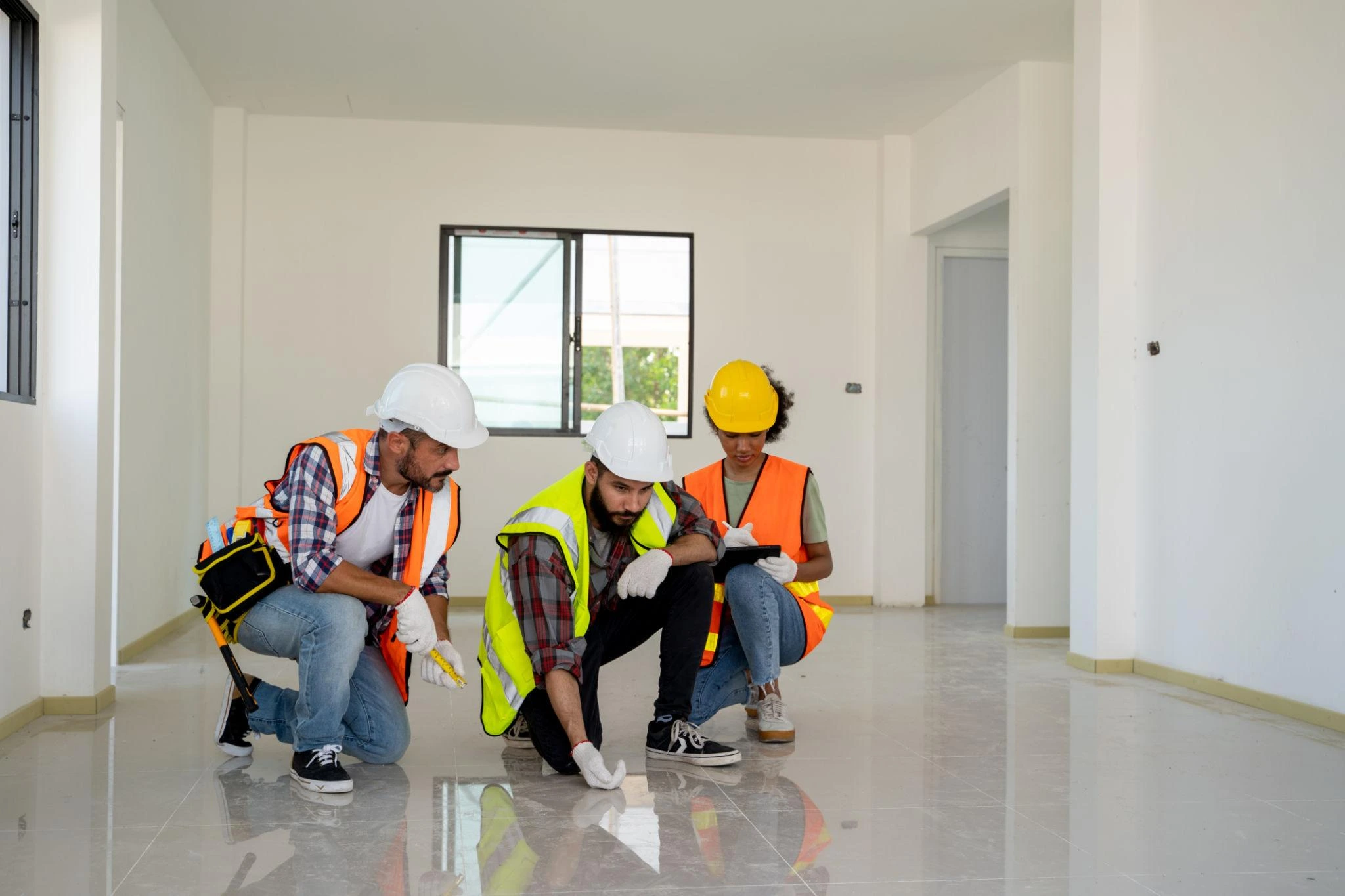
Post-Construction Cleanup Verification
Construction and renovation projects require particle testing verifying adequate cleanup before occupancy. Drywall dust, sawdust, and concrete particles contaminate entire properties. Construction dust persists in HVAC systems, carpets, and surfaces despite cleaning attempts. Professional testing measures particulate levels confirming safe occupancy. Post-construction clearance protects building users from respiratory irritation and allergic reactions throughout renovation projects.
Asbestos Abatement Clearance
Asbestos abatement requires clearance air sampling verifying safe fiber levels before reoccupancy. EPA AHERA standards mandate clearance testing for school asbestos projects. Professional asbestos fiber analysis using phase contrast microscopy determines clearance achievement. Multiple samples required confirming adequate cleanup. Clearance testing protects building occupants from residual asbestos fiber exposure after abatement completion.

Lead Paint Renovation Clearance
Lead paint removal and renovation require clearance testing verifying safe lead dust levels. EPA Renovation, Repair, and Painting Rule mandates clearance for pre-1978 housing and child-occupied facilities. Professional lead dust wipe sampling measures surface contamination. Clearance protects children from lead exposure during and after renovation projects throughout older properties.
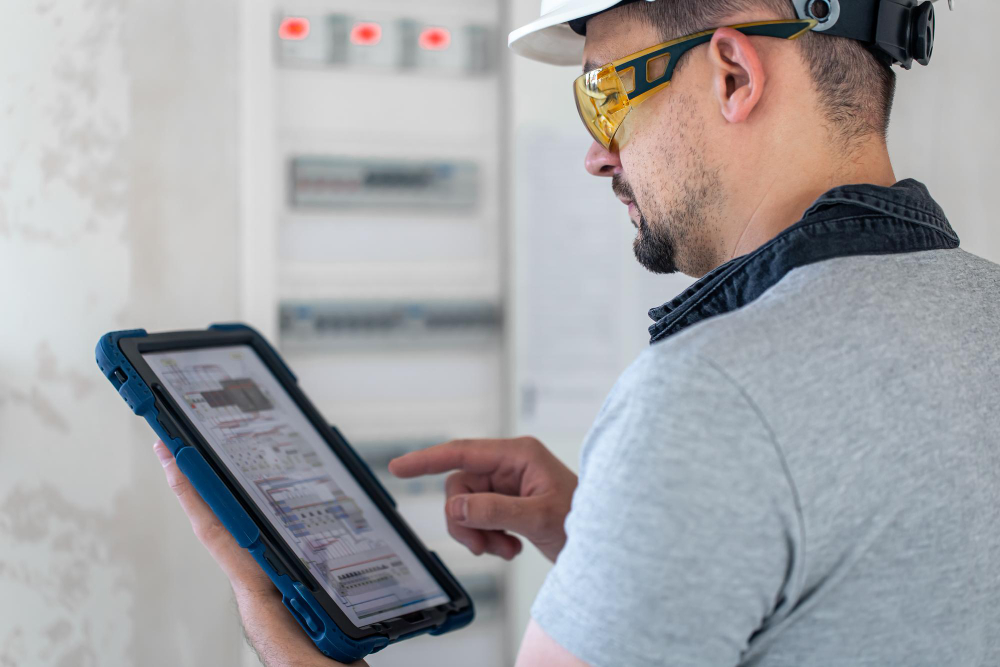
Industrial Hygiene Workplace Monitoring
Workplaces with dust exposures require particle monitoring verifying OSHA compliance. Construction, manufacturing, and industrial facilities require exposure assessment. Silica dust, metal fumes, and wood dust create regulatory obligations. Professional workplace particle testing documents exposures supporting compliance and worker protection throughout industrial operations.

Indoor Air Quality Investigation
Poor indoor air quality complaints require particle analysis identifying contamination sources. Unexplained respiratory symptoms suggest particle exposure. Professional PM2.5 and PM10 testing compares indoor levels to outdoor and EPA standards. Source identification enables targeted remediation improving indoor air quality protecting building occupants.

Real Estate Transaction Assessment
Property transactions benefit from particle testing identifying contamination affecting value and occupant health. Asbestos-containing materials, lead paint, and construction dust create disclosure obligations and liability concerns. Professional testing protects buyers from unknown particle hazards supporting informed purchase decisions throughout real estate transactions.
Why Property Owners Choose Certified Inspectors
Particle analysis requires environmental expertise, proper sampling, and accredited laboratory analysis.
Certified Environmental Specialists
Our certified industrial hygiene specialists utilize professional particle sampling methodologies to ensure full regulatory compliance and maximum result reliability.
NVLAP-Accredited Laboratory Partnership
We partner with NVLAP-accredited laboratories using EPA and NIOSH methods to guarantee certified data analysis and strict quality control.
Advanced Microscopy Capabilities
By utilizing SEM, TEM, and PLM microscopy, we deliver precise particle identification, size distribution analysis, and elemental composition mapping.
EPA and OSHA Compliance Expertise
Our deep knowledge of EPA standards and OSHA workplace limits ensures your sampling strategies and results meet all current regulatory requirements.
Comprehensive Health Risk Assessment
We provide science-based risk assessments, comparing particle concentrations and sizes against exposure limits to protect building occupants.
Our Particle Analysis Process
We’ve designed our process to provide accurate particle assessment and practical recommendations.
Consultation and Sampling Plan
Contact us to discuss your goals. We design a custom sampling plan that targets your specific property concerns and meets all regulatory requirements.
Sample Collection and Laboratory Submission
Our specialists visit your property (1–3 hours) to collect air, surface, or bulk samples. Every sample is secured via a strict chain of custody and sent to an NVLAP-accredited lab.
Laboratory Analysis and Report Delivery
Get your results in 5–10 business days. The report includes particle levels, EPA/OSHA standard comparisons, health risks, and clear remediation steps to protect your South Florida property.
What Makes Our Particle Analysis Different
Particle analysis requires environmental expertise, proper methodology, and accredited analysis.
Certified environmental specialists
NVLAP-accredited laboratory analysis
Advanced microscopy capabilities
EPA and OSHA compliance expertise
Comprehensive health risk assessment
Regulatory clearance verification
Frequently Asked Questions About Particle Analysis
Particle analysis costs vary by scope and analytical methods. PM2.5 and PM10 air sampling costs $150-300 per sample location. Asbestos fiber analysis costs $75-150 per air sample using PCM, $200-400 using TEM. Lead dust wipe sampling costs $40-75 per sample. Crystalline silica analysis costs $100-200 per sample. Complete post-construction clearance testing costs $500-1,200 depending on property size. Investment protects health preventing particle-related illness and ensures regulatory compliance throughout testing programs.
Sample collection typically requires 1-3 hours depending on sampling scope. Laboratory analysis turnaround varies by method: PM2.5/PM10 gravimetric analysis 5-7 days, asbestos PCM fiber counts 24-48 hours, asbestos TEM analysis 7-14 days, lead dust analysis 3-5 days, silica XRD analysis 5-7 days. Rush analysis available for critical clearance testing reducing turnaround for additional cost. Professional service balances thoroughness with timely results.
Safe particle levels depend on particle type and exposure duration. EPA PM2.5 standards: 24-hour 35 micrograms per cubic meter, annual 12 micrograms. PM10 24-hour standard 150 micrograms. Asbestos clearance level 0.01 fibers per cubic centimeter. Lead dust clearance: floors 10 micrograms per square foot, sills 100 micrograms. Silica OSHA PEL 50 micrograms per cubic meter. Professional assessment compares detected levels to protective standards determining safe exposures.
Clearance testing required after asbestos abatement before reoccupancy, after lead paint renovation in pre-1978 housing and child-occupied facilities per EPA RRP Rule, after construction work disturbing lead paint, when specified by remediation protocols or contracts, and when regulatory agencies mandate verification. Professional clearance testing verifies adequate cleanup protecting building occupants and ensuring regulatory compliance.
Particle removal strategies include source control eliminating particle generation, HEPA filtration capturing particles from air, increased ventilation diluting particle concentrations, thorough cleaning removing settled particles, and humidity control preventing biological particle growth. Professional cleaning and HEPA vacuuming remove construction dust. Air purifiers with HEPA filters reduce PM2.5. Post-testing verifies adequate particle removal confirming safe occupancy.
Particles contaminate HVAC systems reducing efficiency and distributing contamination throughout buildings. Construction dust clogs filters, coats coils, and accumulates in ductwork. Particles become airborne each system operation redistributing contamination. Professional post-construction HVAC cleaning removes particle accumulation. Filter upgrades capture smaller particles. Duct cleaning removes settled dust. Testing verifies adequate system decontamination protecting indoor air quality.
Serving South Florida Properties
Certified Inspectors provides particle analysis and air quality testing services throughout Palm Beach County, Broward County, Miami-Dade County, and surrounding South Florida communities.
Schedule Your Particle Analysis Testing Today
Don’t risk building occupant health from particulate matter exposure. Professional particle analysis identifies airborne particles, measures PM2.5 and PM10 concentrations, detects asbestos fibers and lead dust, evaluates construction dust contamination, and provides clearance verification protecting indoor air quality throughout South Florida properties. Our certified environmental specialists deliver EPA-approved sampling methodology, NVLAP-accredited laboratory analysis, advanced microscopy particle identification, health risk assessment, regulatory compliance verification, and comprehensive remediation recommendations supporting safe building occupancy and healthy indoor environments. Whether verifying post-construction cleanup, confirming asbestos abatement clearance, assessing lead dust hazards, monitoring workplace exposures, or investigating indoor air quality complaints, professional particle analysis protects building occupants through accurate assessment enabling targeted effective improvements throughout residential homes, commercial buildings, construction projects, and all occupied facilities requiring healthy particulate-free indoor air quality.